The short version
- Posting more isn’t the answer if the problem is strategy. Effort without direction is just motion.
- Growth leaks out at one specific step: being seen, visiting, clicking, subscribing, spending or staying. Find yours.
- “Petite brunette” isn’t a niche. What you’re known for is.
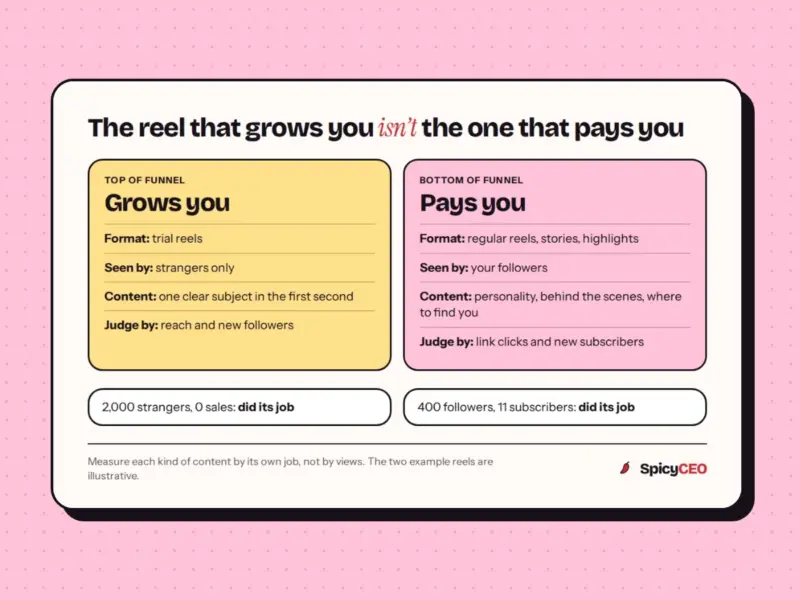
- Fans pay for access to you, not for clips they can find anywhere for free.
- Test one thing at a time and judge it by total revenue.
- Slow months are a reason to promote harder, not a reason to stop.
My first year was slow. Not “a bit quiet”, properly slow. What turned it around wasn’t working harder. I was already working hard. It was looking at the whole thing like a client’s business and asking where, exactly, people were dropping off.
If you’ve been posting for six months or a year and you’re still stuck at a handful of paying subscribers, this isn’t a “give up” article. It’s a “stop, look, and change something on purpose” article. In most cases the problem isn’t saturation or bad luck. It’s that there’s no strategy, just posting and hoping. Hoping doesn’t pay rent.
1. Effort isn’t the same as strategy
You can post every single day, edit for hours and still not grow, because effort without direction goes nowhere. Imagine opening a shop and just stocking the shelves without telling anyone, with no sign outside and the prices guessed. That’s most stuck pages.
You probably have a strategy problem, not a content problem, if:
- You’ve posted consistently for months and your numbers barely moved.
- You’ve never tested a different price, bio or promo approach.
- You can’t say in one sentence why someone should pick you.
- Your social profiles don’t clearly lead anywhere.
- You don’t know which of your posts perform best, or why.
The good news: none of that is about how you look. It’s all fixable.
2. Find the leak
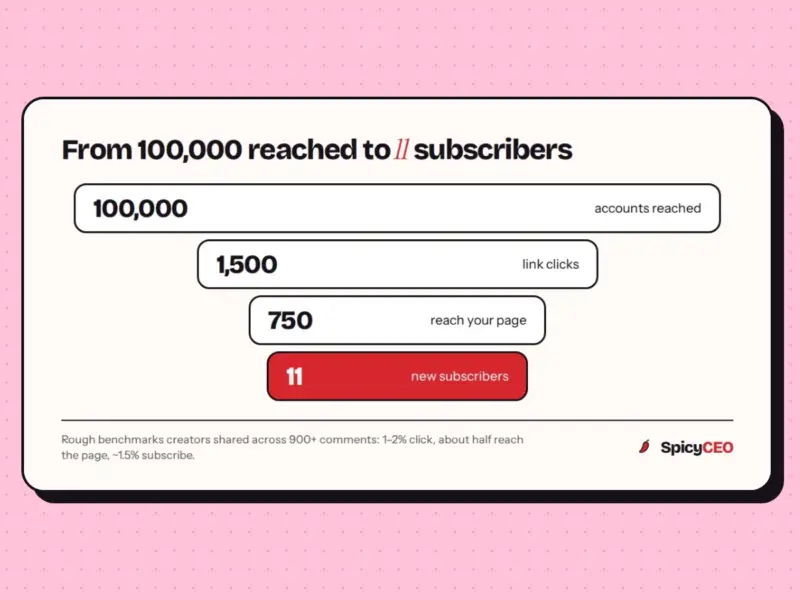
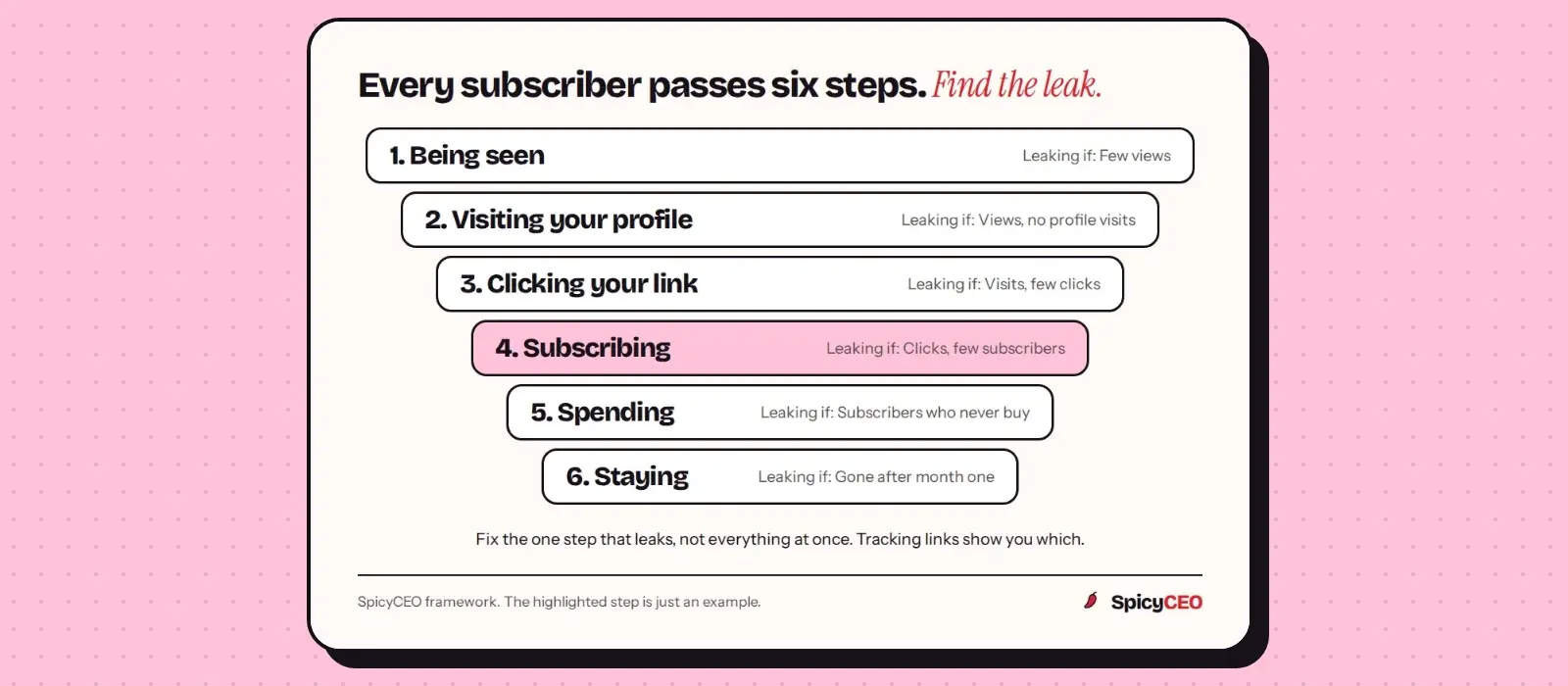
Every subscriber goes through the same steps. Growth stalls when one of them leaks. Find the leaky step and fix that, instead of doing more of everything.
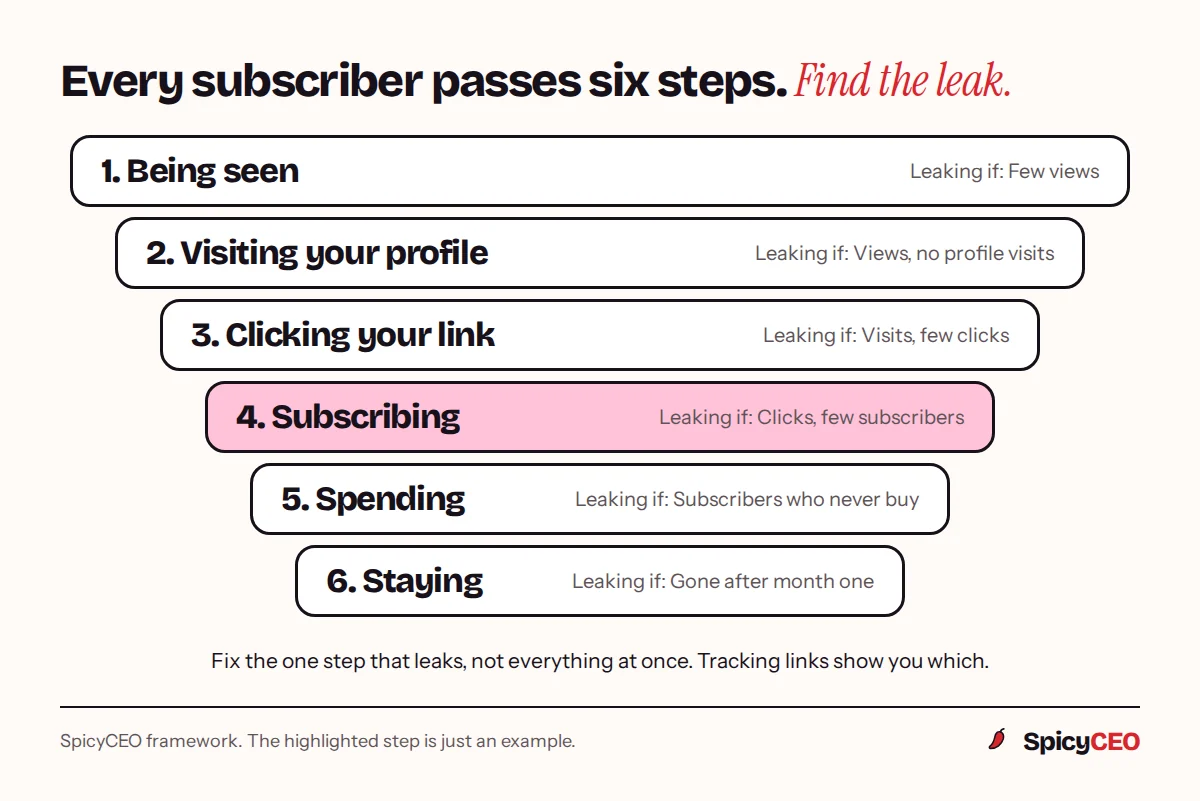
| Step | The symptom | What to fix |
|---|---|---|
| Being seen | Few views or followers on your promo platforms | Post more consistently, try a second platform, check you’re not shadowbanned |
| Visiting your profile | Views, but nobody clicks your name | Captions with personality, posts that make people curious |
| Clicking your link | Profile visits, few link clicks | A clear bio, one obvious link, pinned posts that tease the page |
| Subscribing | Clicks, but few new subscribers | Your page: bio, banner, pinned posts, price, first-month offer |
| Spending | Subscribers who never buy | Welcome message, pay-per-view offers, messaging, pricing |
| Staying | Lots of people leave after month one | Posting rhythm, personality, giving them a reason to stay |
You need tracking links and a simple spreadsheet to see this. Without them, you’re guessing which step is broken. Once you have the numbers, the free funnel calculator turns them into income and shows your biggest lever.
3. Your niche: what you’re known for, not what you look like
“Curvy MILF”, “petite redhead”, “tall brunette”: these are categories, and they’re packed. A niche is a recognisable identity, the sentence someone uses to describe you: “the cosplay girl with a theme every week”, “the trainer who cooks shirtless”, “the one who reviews toys with actual jokes”.
In a crowded category, adding one specific thing changes everything, and it opens up new places to promote, like gaming, fitness or hobby communities. Most creators don’t plan this. They find it by trying different things and watching what works. I’ve written a step-by-step on finding your niche in your first 90 days. If you want numbers behind that, I’ve broken down what fans actually search for, and where.
Then answer the question that sits under everything: why would someone choose you, specifically? If you can’t answer it, your bio, captions and prices can’t either.
4. You’re selling access, not clips
Explicit content is everywhere online for free. The people who spend the most aren’t paying for clips. They’re paying for connection, exclusivity and the feeling of knowing you.
So your marketing should show what subscribing feels like: your humour, your voice, the way you talk to people. Bodies are everywhere. Personality is what keeps someone subscribed for a year. Think of it like a TV series: people don’t keep watching because the actors are attractive, they keep watching because they care about the characters. And the money comes from walking those fans up an upsell ladder, not from adding more of them.
That’s also good news if you worry you’re not “hot enough”. You don’t need to be the most conventionally attractive creator online. You need to be someone people want to spend time with.
5. Price for the business you want
Constant undercharging attracts low spenders who rarely tip, rarely buy pay-per-view and rarely stay. You work harder for less, and burn out sooner.
| Model | How it works | Suits creators who… |
|---|---|---|
| Free page + pay-per-view | Free to follow, money from paid messages and unlocks | are strong at messaging and teasers |
| Paid subscription | Monthly fee, regular posts included | can post consistently and give steady value |
| Hybrid | Lower subscription plus premium pay-per-view and customs | want several income streams (often the most profitable) |
Don’t copy someone else’s model. Test it on your page. If you’ve been at the same price since day one, you’re guessing. The full case for charging more is in how to raise your prices without losing your fans.
6. Test like a professional
Testing is normal in every other business and strangely rare among creators. Try two versions of something, measure, keep the winner, then test the winner against something new.
- Subscription price: one month at $9.99, the next at $14.99. Which made more total money?
- First-month discount: do half-price subscribers stay after the discount ends, or leave?
- Bio: playful and personal, or direct and benefit-focused?
- Pinned posts: a teaser video, a personal intro, or your most popular post?
- Mass messages: different prices, preview images and wording. Track how many open and how many buy.
- Promo captions: a mysterious tease or a direct call to action?
Change one thing at a time, give it two weeks, and write the results down.
7. Consistency, with a feedback loop
If you post once or twice a week, volume may be your problem: most growing creators post daily or nearly daily while they grow. But consistency alone isn’t enough. Posting every day for months with no change means something else is broken.
A feedback loop means post, measure, look, adjust. Which posts got the most engagement? Which platform sent people who actually subscribed? What time works? Then change what you do based on the answers, not on what you feel like posting.
8. Stop blaming the calendar
January is slow because of Christmas spending. Summer is slow because of holidays. Autumn is slow because of school costs. If you look for an excuse, every month has one.
Creators who earn well all year push harder in the months they expect to be slow: more promotion, a themed sale, a new platform, special content. Expect the dip and plan for it.
9. Don’t pay for “promotion” in your DMs
If someone messages you offering to promote your page for a fee, assume it’s a scam. These offers almost always deliver bot followers or nothing. Spend that money on your own skills instead: better light, better captions, a course, your time.
Natalia’s take
Here’s the uncomfortable bit. If your page isn’t growing, the answer is almost never “work harder doing the same things”. It’s “find the leak and change one thing”. It’s a business. Run it like one.
10. The honest self-audit
Answer these honestly. Each “no” is your next task.
- Can you say why someone should choose you in one sentence?
- Does every social profile clearly lead to your page?
- Have you tested at least two prices or pricing models in the last three months?
- Can you name your three best-performing posts, and explain why they worked?
- Are you posting at least five times a week across your promo platforms?
- Have you asked your subscribers what they like most?
- Does your content look clearly different from others in your category?
- Are you learning and trying one new marketing idea every week?
11. When to pivot, and when to walk away
Sometimes the right move is a big change: a new niche, a new price model, a new main platform. Give it a set period, around 90 days, and commit fully.
And sometimes, after genuinely learning the business side, testing properly and staying consistent, it still doesn’t work. It’s okay to stop. There’s no shame in putting your energy somewhere that pays you back better. Your exit plan starts on day one, and that includes knowing when to leave early. What doesn’t work is doing the same thing for another year and hoping.
Quick questions
How long should I give my page before changing strategy?
If nothing has moved after two or three months of consistent posting, change one thing and measure it for two weeks. Don’t wait a year.
Is my market just too saturated?
Categories are crowded. Niches usually aren’t. Adding one specific angle to what you do often matters more than the size of the market.
Should I post more?
Only if you’re posting less than about five times a week across your promo platforms. Otherwise, find the leaky step first.
Do I need to show my face to grow?
No. Showing your face can help conversion, but faceless creators do well by leaning harder into niche, personality and mystery.
Are paid shoutouts worth it?
Offers that arrive in your DMs almost never are. Shoutouts with creators you know and trust, in your niche, can be a different story.
About this article. General education, not business or financial advice. Results vary with niche, audience, effort and timing. Spotted a mistake? Email [email protected].