The short version
- Fans rarely go quiet because of you. Life, money, a changed routine or a shift in what you offer are far more common reasons.
- Keeping fans is cheaper, warmer and less draining than finding new ones. Most creators spend almost all their energy on the opposite.
- Message fans who’ve been quiet for 14 to 60 days. Three days is just a busy week; six months is usually gone.
- Segment first: active chatters, spenders, big spenders and unengaged fans each get a different tone.
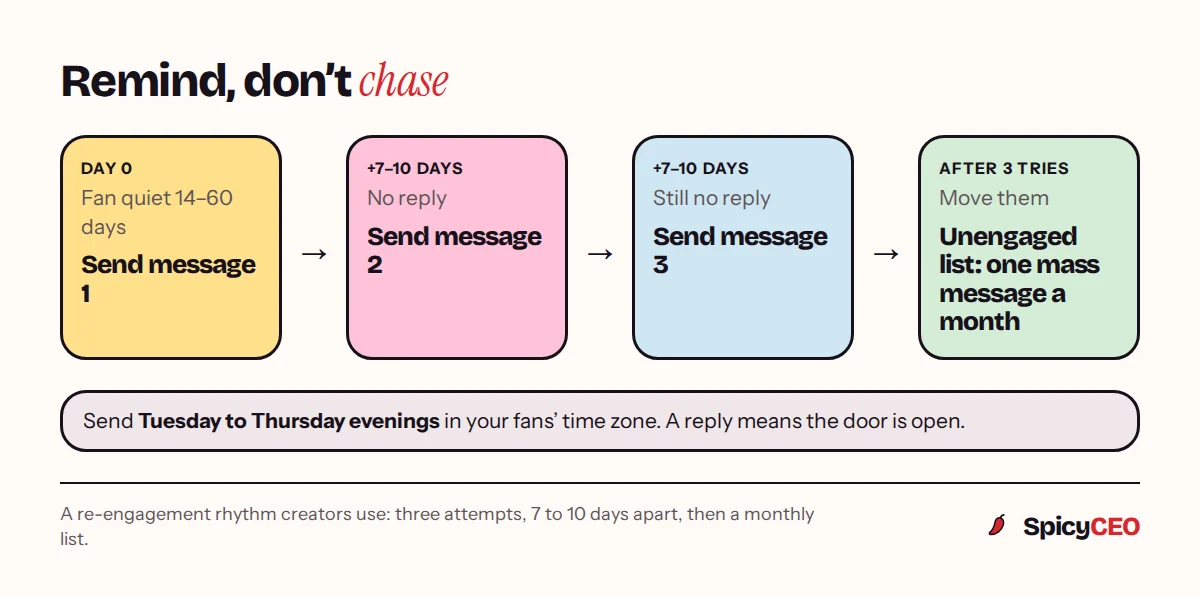
- Send midweek evenings in your fans’ time zone, every 7 to 10 days, three attempts at most. Then move them to a monthly list.
- You’re not begging. You’re reminding them that something they liked is still here.
There’s a particular kind of quiet that every creator knows. The fans who used to say good morning every day, who tipped without thinking, just stop. No goodbye, no reason. It’s very easy to take that personally. It’s also very rarely personal.
On subscription platforms you’re selling access to you as much as content, so when your DMs go quiet, your income shows it within days. The instinct is to either chase everyone at once or say nothing and hope. Neither works. What works is boring: a small system you run every week. Here’s how to win back fans on OnlyFans or any other fan site, with five messages you can adapt, based on what experienced creators report from testing them.
1. Why fans go quiet (and why it’s usually not you)
Life gets in the way. This is the big one: work stress, family, health, burnout from endless scrolling, money worries. Often they haven’t left you. They’ve left the routine of opening the app.
What they signed up for changed. Maybe they came for daily chats or customs, and then you got busy and stopped offering them. Or their own schedule changed. They don’t announce it. They drift.
Some are testing you. A few fans pull back to see whether you notice. Not very mature, but very human. This business runs on attention, and some people want proof they mattered.
Budgets get trimmed. Subscriptions add up and prices are up. Fans don’t necessarily quit adult content, but they cut the ones that don’t remind them why they’re worth it.
The thing to remember: quiet fans still like you. They’re dormant, not gone. The two mistakes are chasing so hard you push them away, or saying nothing and letting the money leak out quietly. The second one is far more common.
Natalia’s take
Fans are customers. Treat them well, but they’re customers. A shop doesn’t cry when a regular stops coming in. It sends a nice note, maybe a reason to come back, and gets on with its day. Same energy here. Silence is a business cycle, not a verdict on you.
2. Before you send anything: the rules
Don’t blast your whole list with “hey, where did you go?” That’s panic, not strategy. Set it up properly first.
Rule 1: Target fans who’ve been quiet for 14 to 60 days. Less than two weeks is just a busy week. More than a couple of months and they’re hard to bring back. In between, they still remember you; they’ve just fallen out of rhythm.
Rule 2: Segment your fans into lists. A fan who has spent thousands with you shouldn’t get the same message as someone who tipped once. Most fan platforms let you build lists and message each one separately. Start with four:
- Active: they reply to your messages (whether or not they spend).
- Spenders: they’ve tipped or bought, but they’re not your biggest fans.
- Big spenders: your VIPs. Treat them as VIPs.
- Unengaged: they’ve stopped replying.
Rule 3: Timing matters. Midweek, Tuesday to Thursday, tends to work best. Mondays people are catching up; Fridays they’re checked out. Evenings are when people scroll and reply. Your platform’s statistics usually show which countries your fans are in, so work out when their evening is in your time zone and send then.
Rule 4: Cap your follow-ups. One message every 7 to 10 days, three attempts at most. After that, stop spending energy on that fan individually. Move them to your unengaged list, which gets one mass message a month.
Rule 5: Remind, don’t beg. “Please don’t leave, I need you” and “you liked this, and it’s still here” are completely different messages. Confidence changes the replies you get.
3. Five messages to win back fans on OnlyFans (or any fan site)
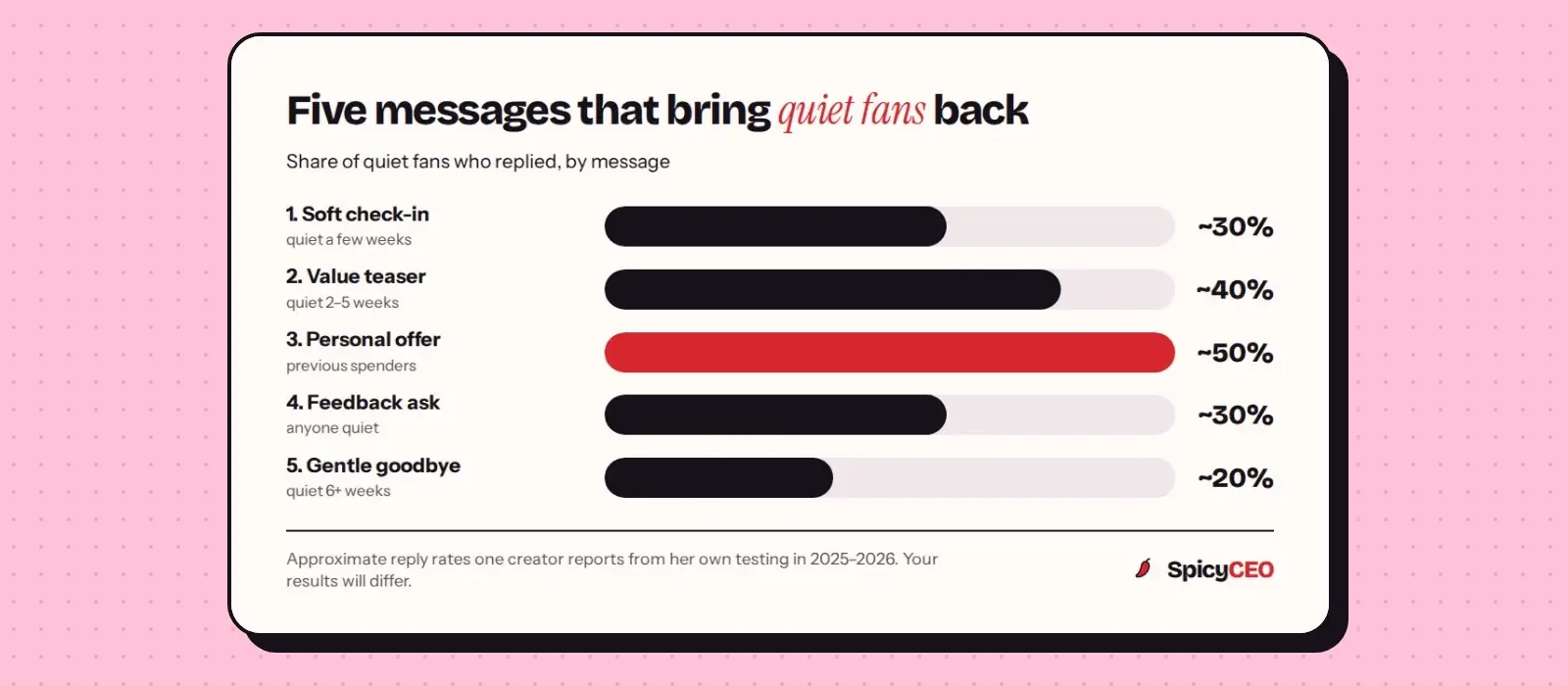
These are templates, not scripts to paste word for word. Change the wording until it sounds like you. The reply rates are what one experienced creator reports from her own testing; your numbers will differ, so test them on your own fans.
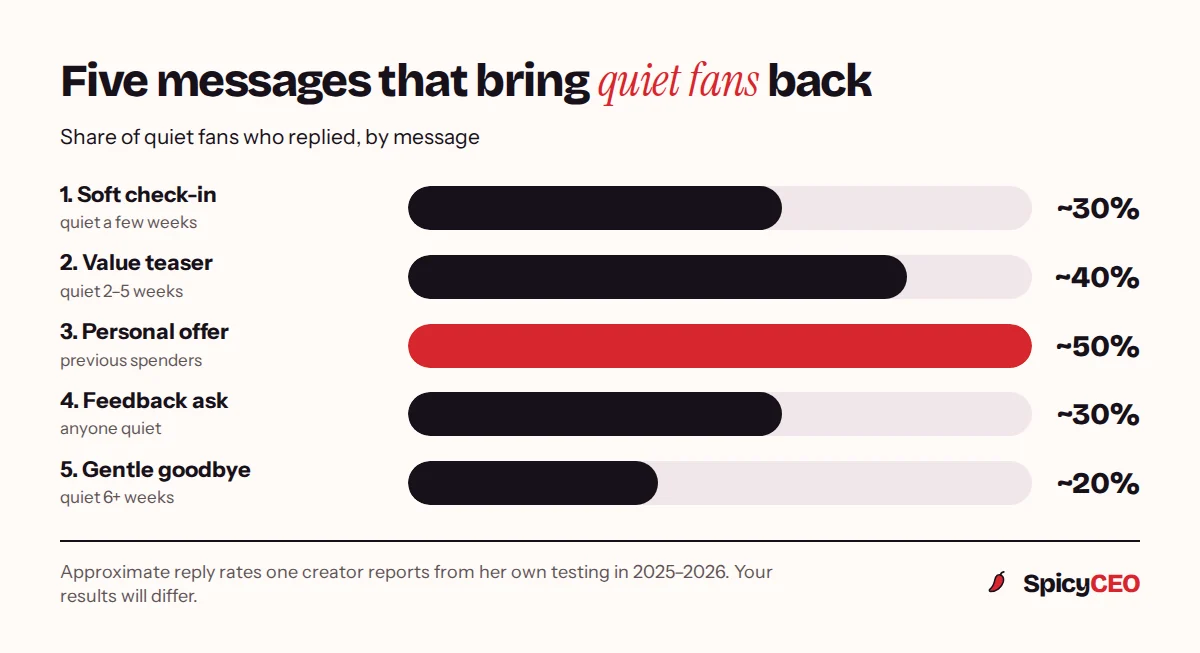
1. The soft check-in. For fans who’ve been quiet a few weeks.
Hey [name], it’s been quiet on your side. Everything okay? No pressure, just checking in.
That’s it. No guilt, no sale. It feels human, so people answer it, often with “sorry, work has been crazy”. Once they reply, the conversation is open again. Reported reply rate: about 30%.
2. The value teaser. For mid-tier fans quiet for two to five weeks.
Quick heads-up: I just sent my newest [describe it] to my VIP list. If you didn’t get it, you might not be on it. Want me to add you?
It reminds them what they’re missing without shaming them, and positions you as moving forward. Reported reply rate: about 40%. Only send it if the VIP list and the content are real.
3. The personal offer. Best for fans who’ve spent before.
[Name], you’ve been one of my favourite supporters and I really appreciate you. I’ve put [this set] at half price for you. If you’d rather lurk, just unlock it quietly. If you want to chat, tell me one thing you’d love me to make for you.
It combines appreciation, a reason to act now and a choice, so it feels like being seen rather than sold to. Reported reply rate: about 50% with previous spenders.
4. The feedback ask.
Haven’t heard from you in a while, hope all is well. What’s one thing that would make my page better for you? I’d genuinely love your input.
People come back when they’re invited to take part. Even when they don’t spend, you get real market research for free. Reported reply rate: about 30%.
5. The gentle goodbye. For fans quiet six weeks or more who haven’t answered anything else.
Hey, it’s been a while. If life pulled you away, no hard feelings at all. If you’re still interested, reply and I’ll send you a little something. Otherwise I’ll leave you be.
It closes the loop, and the sense of a door closing brings some people back. Reported reply rate: about 20%. The rest you can let go, which frees your head as much as your inbox.
4. The monthly message for your unengaged list
Fans who didn’t answer three attempts go to your unengaged list. Once a month, send that whole list one curiosity-led message, something like “I thought of you today, are you still around?” Rotate a new one each month so it never feels copy-pasted.
An AI writing tool can draft a batch for you. A prompt that works: “Write 20 short, friendly messages to re-engage fans on my subscription page who haven’t replied in a while. They’ll go out as one mass message but should feel personal. They should make people curious enough to reply. Don’t claim anything untrue, like a specific past conversation or a request they never made.” Save the chat and pull one each month.
That last line matters. A message like “I’m holding the thing you asked for” gets replies, but if he never asked for anything, you’ve just lied to a customer to get his attention. Curiosity is fine. Making things up isn’t, and fans notice.
5. What the results can look like
One creator with many years in the industry ran these messages in waves across about 100 lapsed fans at the end of 2025, mostly messages one to three. She reports that 52% replied, about 30% subscribed again and the comeback brought in over $4,000 in extra revenue. No new traffic, no viral post, just structured follow-up.
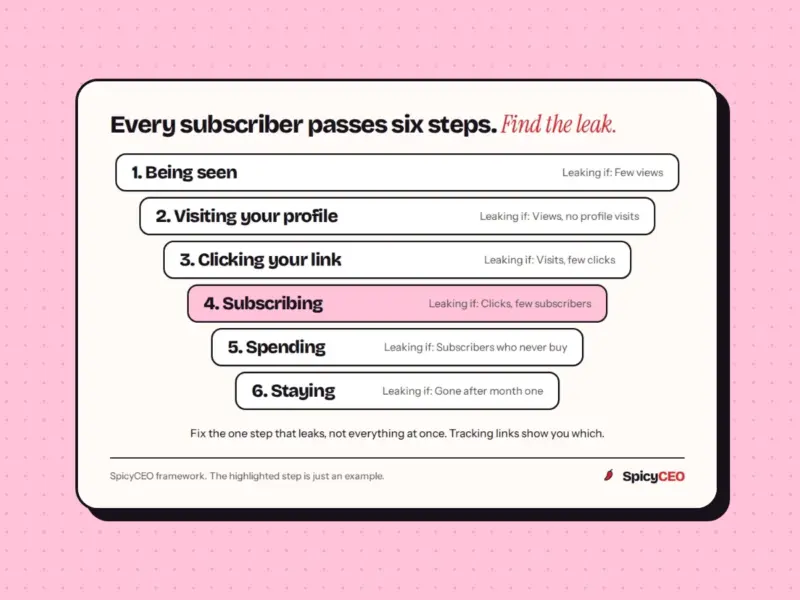
Your results will depend on your page, your prices and how long fans have been gone. But even if only one in ten comes back, that’s income you didn’t have to buy shoutouts or chase new followers for. If you’re worried about losing subscribers when they turn off rebill, this is the other half of the answer: a lapsed fan isn’t gone, just quiet. It also fixes the last step of the subscriber funnel, the one most creators never measure: staying.
6. Your action plan for this week
- 01Build your four lists: active, spenders, big spenders, unengaged.
- 02Pick 20 to 50 fans who’ve been quiet for 14 to 60 days.
- 03Test two or three of the five messages on them, sent midweek in their evening.
- 04Track replies first, sales second. A reply means the door is open.
- 05Follow up after 7 days with a different message. Three attempts at most, then move them to the monthly list.
Most lost revenue isn’t lost because fans stopped caring. It’s lost because nobody followed up. When you have a system for it, you stop riding the “great week, everything is dying” rollercoaster and start seeing patterns you can plan around. That’s the difference between being a creator and running a business.
Quick questions
How do I win back fans who stopped messaging me?
Message them when they’ve been quiet for 14 to 60 days, with a short, low-pressure check-in. Follow up every 7 to 10 days with a different message, three times at most, then move them to a monthly list.
Is it desperate to message fans who went quiet?
Not if you’re reminding rather than begging. A friendly check-in or a genuine offer is normal customer care. Ten messages in a week isn’t.
When is the best time to send re-engagement messages?
Tuesday to Thursday evenings in your fans’ time zone tend to work best. Check your platform’s statistics to see which countries most of your fans are in.
Should I offer a discount to bring fans back?
For previous spenders, a personal offer works well and makes them feel appreciated. Keep it personal and occasional, so regular buyers don’t learn to wait for discounts.
What if a fan never replies?
After three attempts, stop messaging them individually and add them to your unengaged list, which gets one message a month. Not every lead converts, and your time is worth protecting.
About this article. Reply rates and results are what creators report from their own testing in 2025 and 2026, not guarantees. Always follow your platform’s rules on messaging and promotions, and never make claims to fans that aren’t true. Spotted a mistake? Email [email protected].